

Loading website
00%
Vendor Assessment and Third-Party Risk Management for DPDP with
Under the DPDP Act, what your processors do with personal data is your responsibility. CoTrust finds the vendors that actually receive personal data, assesses them, and keeps assessing them, for as long as they handle your data. Run it as SaaS or on your own servers.
What the DPDP Act Asks, and Where CoTrust Fits
These obligations sit with your organisation as the Data Fiduciary. CoTrust gives your teams the technology to carry them out. Most obligations apply from 13 May 2027.
Stay responsible for compliance, including processing a Data Processor does on your behalf
Assesses each processor, and keeps assessing it
Engage a Data Processor only under a valid contract
Keeps the contract status of each vendor in view
Have your processors erase personal data when you must
Shows which processor holds which personal data
Take reasonable security safeguards, including at your processors
Records each vendor's safeguards and when they were last checked
Start With the Vendors That Actually Get Your Data
Most enterprises start from the procurement list. CoTrust builds the list of vendors that process personal data from where personal data actually goes, from your applications' outbound flows and your code, and sets it against the vendors you know about.
| Vendor type | What they usually receive | What to check |
|---|---|---|
| KYC and eSign providers | Aadhaar number, PAN, photographs, signed documents | How long they keep documents, and where |
| Payment gateways | Card details, UPI ID, bank account number | Storage in India, and their own sub-processors |
| Credit bureaus | PAN, date of birth, loan and repayment data | The purpose each pull is made for |
| Messaging platforms | Mobile numbers and message content | Whether message content is retained |
| Collections and BPO partners | Contact details, loan and payment history | Who on their side can see the data |
| Marketing and analytics tools | Device identifiers, behaviour, email addresses | Whether consent covers what they do |
| Cloud and hosting providers | Everything you store with them | Region, encryption and breach notice |
Assess Each Vendor Against the DPDP Act
Each vendor gets an assessment of how it handles your personal data: its security safeguards, what it uses the data for, how it erases data, how it reports a breach and where it stores data. Your team sees which vendors pass, which have open issues, and who owns each fix. Vendors that handle sensitive data, such as Aadhaar numbers or health records, can be assessed in more depth than a vendor that only sees a name and email.
What a Processor Contract Should Cover
The Act lets you use a Data Processor only under a valid contract. CoTrust keeps the contract status of each vendor next to its assessment, so a vendor processing data without a current contract stands out. A contract written for the DPDP Act usually covers:
- The only purposes the processor may use the data for
- The security safeguards it must keep
- How quickly it must tell you about a breach
- Erasure when you instruct it, and at the end of the contract
- Whether it may use sub-processors, and on what terms
- Where the data may be stored, including any transfer outside India
- Your right to assess and audit it
Keep Assessing After Onboarding
A vendor that passed a review two years ago may store data somewhere new today. CoTrust assesses vendors on an ongoing basis, so their status reflects how they handle data today. A change in what a vendor receives, picked up by flow monitoring, can prompt a fresh assessment on its own.
Map Each Vendor to the Data It Holds
CoTrust maps each type of personal data to the processor that receives it. When a person asks for erasure, your team knows which vendors to instruct. When a vendor has a breach, you know exactly whose data and which categories were exposed. When a contract ends, you know what to ask the vendor to erase.
What Your Team Sees for Each Vendor
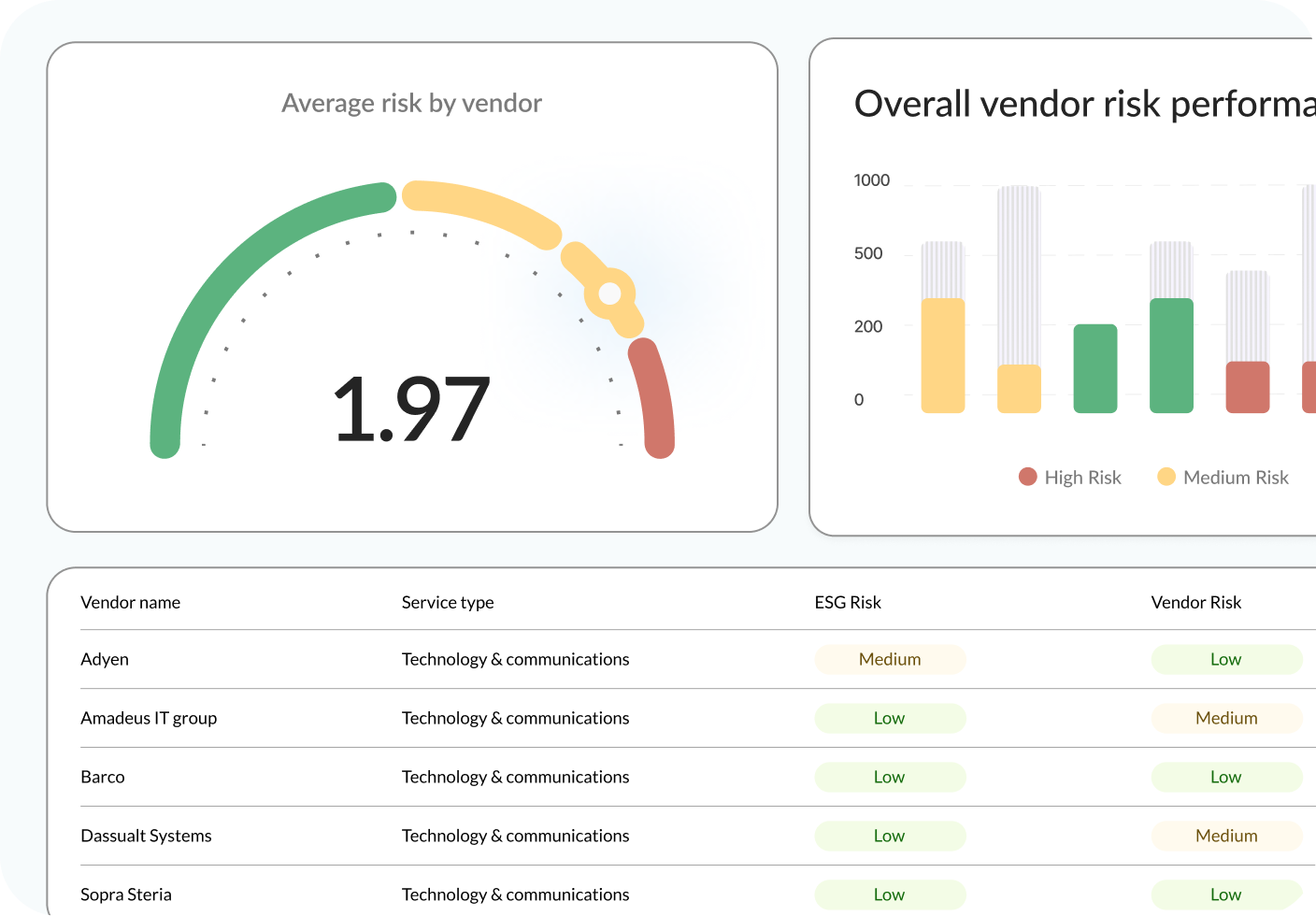
For every vendor, CoTrust shows the personal data it receives, the processing activities in your ROPA it serves, its latest assessment and open issues, its contract status and when it was last checked. Your privacy team can sort vendors by risk, so the review starts with the ones holding the most sensitive data.
Vendor Risk in Your DPIAs and Incidents
Vendor assessments feed the rest of CoTrust. A DPIA sees whether the vendors behind a processing activity still meet the Act's requirements, and an incident shows straight away whether a vendor is involved.
Bring Partners Into the Programme
Your processors are part of your DPDP programme. Digio's timeline for an enterprise reaching the May 2027 deadline sets aside January to March 2027 for exactly this: working with your processors to validate consent and capture their processing in your ROPA. Starting the vendor assessments in 2026 leaves room for that work.
Read the guideDigital lending: navigating the interplay between RBI guidelines and DPDP Rules →
Run CoTrust as SaaS or on Your Own Servers
The SaaS version is a cloud-based platform with a flat recurring fee. The on-premise version installs on your local servers, with pricing based on the number of profiles and connectors.
See it first. Book a 60-minute walkthrough on a sample banking or e-commerce environment, or a 30-day readiness assessment that runs on your own systems and gives you real findings.
Trusted by 2,500+ enterprises
Banks, lenders, brokers and fund houses already run Digio in their customer journeys, reaching 100 million+ individual users.




















 ISO/IEC 27001
 SOC 2 Type II
- Data residency in India
- Cloud or air gapped on premise
Questions About Vendor Risk Under the DPDP Act
Is a Data Fiduciary responsible for its processors under the DPDP Act?
Yes. The Act keeps the Data Fiduciary responsible for compliance, including processing a Data Processor carries out on its behalf.
Does the DPDP Act require a contract with every processor?
Yes. A Data Fiduciary can engage a Data Processor to process personal data on its behalf only under a valid contract.
How often should vendors be reassessed?
Whenever what they do with your data changes, and on a regular cycle in between. CoTrust assesses vendors on an ongoing basis, so a change shows up without waiting for the annual review.
What is the difference between a Data Processor and a third party?
A Data Processor processes personal data on your behalf and on your instructions. A third party that decides its own purposes for the data is a Data Fiduciary in its own right.
How does CoTrust find vendors we did not know about?
It maps where personal data leaves your applications and reads your code for outbound integrations, then compares the destinations with your vendor list.
What happens to a vendor's data when the contract ends?
The vendor should erase it on your instruction. CoTrust shows which personal data each vendor holds, so you know exactly what to ask it to erase.
Explore More of CoTrust
- ProductData Flow MonitoringSee where personal data moves, and who touches it on the way.
- ProductEnterprise ROPAA living record of every processing activity and its purpose.
- ProductDPIAAssess the risk of new processing before it starts.
- PlatformCoTrust overviewThe whole platform, from discovery to proof.
Try first. Subscribe later.
Digitally transform business operations with Digio!
Learn how Digio can enhance your business productivity
Get 1-on-1 business use case solutioning
Speak with our business consultants to get a solution walkthrough for your business requirement
Test the APIs
Let your development team test our API suite to understand configurability and product integration
Subscribe
Get the best in industry commercials for your business usecase